Location; Hull
Completion Year; Ongoing
CRODA
Croda is a global leader in the field of specialty chemicals, recognised for delivering smart science that improves lives. With operations in over 90 countries, Croda develops high-performance, bio-based ingredients that support consumer care, life sciences, and a wide range of industrial markets. Their approach is underpinned by a commitment to sustainable innovation and environmental responsibility, combining deep scientific knowledge with a long-term vision for social and ecological impact. As part of its continued investment in research and operational excellence, Croda sought to upgrade and expand one of its key facilities, ensuring it remained fit for purpose in the context of evolving industry demands and internal growth.


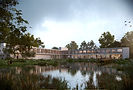
The proposed development forms a comprehensive redevelopment strategy for the site, focused on enhancing both the functional performance of the facility and the wellbeing of its users. Central to the proposals was the construction of a new-build laboratory and testing facility, designed to replace the ageing and outdated laboratories constructed in the 1960s. These new spaces offer state-of-the-art environments for scientific research and product development, tailored to meet contemporary expectations around technical performance, safety, and compliance. They also reflect the importance Croda places on maintaining world-class standards in its core innovation areas.
Alongside the laboratories, the scheme introduces a new administration and office building, incorporating a formal reception, meeting spaces, and both cellular and open-plan offices to support a range of working practices. This building has been positioned and designed to act as a front-of-house for the wider site, helping to improve wayfinding and strengthen the visitor experience.
Additionally, a dedicated control centre was planned and delivered as part of the works, serving the operational and logistical needs of the plant itself. This facility is critical to day-to-day performance and was developed in close consultation with Croda’s internal teams to ensure technical robustness and future adaptability. A key ambition of the project was not only to introduce new buildings but also to extract value from the existing building stock through sensitive refurbishment and adaptive reuse. A series of internal upgrades were designed to create improved staff welfare areas, modern conferencing facilities, and high-quality training environments. These improvements support Croda’s broader goal of nurturing its workforce and promoting collaboration, continuous learning, and employee wellbeing. Rather than pursuing wholesale demolition, the approach taken was to work with the existing fabric where viable, integrating new services, finishes, and layouts to provide long-term flexibility and resilience.

Beyond the building fabric, significant attention was given to the wider site infrastructure and public realm. The development includes extensive external works, such as new internal roadways, improved hard surfacing, accessible routes, and coordinated landscaping proposals. This included the planting of new trees and vegetation to enhance the visual character of the site while also contributing positively to local biodiversity and microclimate regulation. A particularly important element of this work was the refurbishment and ecological enhancement of an existing ‘wildlife’ area—an underused and overgrown part of the site that has now been repositioned as a key amenity space, supporting habitat restoration and informal recreation.
The design process was guided by the need to produce a robust outline scheme that could inform Croda’s internal capital expenditure (CapEx) planning. This added a layer of complexity, as the scheme had to balance long-term vision with short-term deliverability, allowing for phased investment while remaining cohesive and future-proof. The masterplanning process involved detailed coordination across multiple workstreams, drawing together information on spatial needs, staffing numbers, departmental connections, and operational workflows.
At the same time, the scheme had to respond to a series of technical constraints and regulatory obligations. Laboratories, control centres, and high-spec industrial environments each bring with them stringent compliance requirements, particularly in terms of safety, ventilation, containment, and security. Our team worked closely with Croda and their technical advisors to ensure that the design not only met these requirements but was also capable of adapting to future regulatory change. Equally, the development had to respect broader planning and environmental considerations, particularly in terms of site layout, access, and landscape integration.
The resulting design represents a carefully considered response to a complex brief, shaped by both immediate functional demands and a longer-term strategic vision. It provides Croda with a flexible, high-performing, and sustainable facility that reflects the company’s global standing and its ongoing investment in science, people, and place.
GALLERY


